Friday, 16 October 2020

Have you ever met a Viscacha rodent that looks like a rabbit

Mountain-Viscacha-info


The Viscacha rodent looks a lot like a rabbit because of the elite evolution. They live in South America, Although it looks like a rabbit, it is not a rabbit. It is the name of two genera of the Chinchillidae family, Visachas or Visachas rodents.

They are of 5 species (Wikipedia), Their soft fur is long and dense, and the soles of the feet have fleshy pads. Four fingers with thick nails that they use to dig the soil.

The Viscacha has a long, bushy tail and long hindlimbs, short forelimbs. The tails of viscachas are not just for species determination. Wagging their tails also shows how they are feeling. When the rodent feels good, its tail is extended, And when they feel bad, their tails curl.


Mountain Viscacha


Lagidium-mountain-viscacha-info
Cody H.CC BY 2.0, via Wikimedia Commons


KINGDOM

Animalia

PHYLUM

Chordata

SUBPHYLUM

Vertebrata

CLASS

Mammalia

ORDER

Rodentia

FAMILY

Chinchillidae

GENUS

Lagidium

SPECIES

Lagidium viscacha


A new species, the mountain Viscacha is one of the 5 viscachas species. they live in the Andes Mountains from central Peru southward to Chile and Argentina, usually at altitudes between 13,000 and 16,000 feet.


Their ears are long and look a lot like rabbits.


  • Weight: Up to 6 pounds.


  • Size: Body Length of 30cm to 45cm.


  • Body color: The fur on the upper parts is dark gray to brown, often with dark stripes on the bottom of the back; Underparts are white, yellow, or gray.


  • Tail color: Black or reddish-brown.


Plains Viscacha:


Lagostomus-maximus-Plains-Viscacha-info
Brian Gratwicke, CC BY 2.0, via Wikimedia Commons


KINGDOM

Animalia

PHYLUM

Chordata

SUBPHYLUM

Vertebrata

CLASS

Mammalia

ORDER

Rodentia

FAMILY

Chinchillidae

GENUS

Lagidium

SPECIES

Lagidium viscacha


A large rodent is The plains viscacha. They live together with one or more males and many females. They are native to sparse grasslands in Argentina, Paraguay, and southeastern Bolivia at altitudes up to nearly 3,000 meters.


  • Weight: Up to 4 pounds.


  • Size: Body length 50cm to 60cm and tail length 20cm.


  • Body-color: The upper parts vary from dark gray to pale brown and the underparts are white. Broad black and white stripes—including a mustache—mark the face.

Southern Viscacha


Southern-vizcacha-info
 

KINGDOM

Animalia

PHYLUM

Chordata

SUBPHYLUM

Vertebrata

CLASS

Mammalia

ORDER

Rodentia

FAMILY

Chinchillidae

GENUS

Lagidium

SPECIES

Lagidium viscacha


The southern viscacha is a member of the Chinchilidae family. Found in Argentina, Bolivia, Chile, and Peru. It is a colonial animal that lives in small groups in rocky mountain areas. They live around rocks and crags where vegetation is rare. Its altitude ranges from about 700 to 5,100 m above sea level. 

They are very active during the day and in the evening, At this time they come out from under the ground to eat. South Viscacha do not go too far from the rocks, as they can quickly hide in a hole when in danger.


  • Weight: Adult Viscacha weight is 4.50 pounds.

  • Size: Full body size 39.6 cm.

  • Color: The color of the upper parts is yellowish gray, pale underparts, and a black-tipped.

  • Lifespan: 19 yrs.


Northern Viscacha


Northern vizcacha anipetsus


KINGDOM

Animalia

PHYLUM

Chordata

SUBPHYLUM

Vertebrata

CLASS

Mammalia

ORDER

Rodentia

FAMILY

Chinchillidae

GENUS

Lagidium

SPECIES

Lagidium peruanum


The Northern Viscachas live at altitudes of 300 and 5000 meters above sea level. Northern Peru and Northern Chile are native to Northern Viscacha, Presence can also be noticed in the vicinity of Lake Titicaca in Peru and Bolivia. Most of the Northern Viscachas are where the trees are more, And the snow stays in such places.


Northern viscachas are herbivores animals that feed on grass, foliage, tree roots, and bark.

November and October are the breeding season for The viscacha. After 140 days of gestation, they give birth to a child.


  • Weight: Adult Northern Viscacha weighs up to 1.98 pounds to 3.5 pounds.

  • Size: Adult Northern Viscacha head to body size 45cm.

  • Color: The northern Viscacha's upper surface is dark gray and lower altitudes to brown at higher elevations. And the lower surface of the body is cream or pale gray and the tip of the tail is reddish-brown or black.

Saturday, 10 October 2020

Persian cat breeds facts, history and information


One of the oldest and most popular beautiful cat breeds in the world is the Persian cat. Persian cats are popular for their very calm, sweet nature. Persian cat breeds facts, history, and information


Related post: 


Persian cat History

The history of the Persian cats is somewhat obscure, with the initial idea that these cats were native to Persia (now Iran) and Turkey. In 1620, an Italian traveler, Pietro Della Valle, was the first to take a Persian cat to Italy. It is acknowledged that The Persian cat he took was the first Persian cat to enter Europe. Since then, Persian cat breeds have gained popularity throughout Europe as a domesticated cat.

Persian is very popular in America. First Persian arrived in America in the late 1800s. At the Cat Show in 1871, at the crystal palace there were Persian cats among the different breeds of cats In a short time, the Persian has become the most beloved cat breed in the world, valued for its beautiful appearance and sweet personality.


Persian Cat Breeds Overview

doll face Persian cat


Length

The Persian is a medium-size cat 10-15 inches tall.


Weight

The Persian Cat weighs between 7 to 12 pounds.


Coat

The coat is long, thick, and with a thick, luxurious soft undercoat.


Coat Color

Recognized by the largest registry CFA that Persian cats have a mixture of seven colors. The colors are Solid Color, Shaded and Smoke, Silver and Golden, Tabby, Parti-color, and Himalayan, Calico, and Bicolor.


Eye Color

eye color depend on the coat color. If the Persian cat coat colors white eyes deep blue. the golden or silver color coat has blue-green eyes.


Lifespan

11 to 17 years.


Persian Cat Popularity

Easily recognized for their luxurious long coats and large, expressive eyes, the Persian cats are one of the most beautiful cat breeds in the worldThe number of Persian cat registrations was declining in England in the early 1990s, and in 2001 the Persian top lost to British Shorthair. In 2008, the Persian cat was selected as the most popular cat breed in the United States. The number of Persian cats registered in France fell between 2003 and 2007. According to the 2012 census, the position of the Persian cat is at number 6.


Persian Cat characteristics

Persian cats are considered to be relatively calm and sweet cats who like to roam around the home. Persian cats have many good qualities, such as being easy to care for and being clean. If you don't give your cat much time or if you spend most of the day in the office, he doesn't get angry.

There are two types of Persian cats breed 

That famous doll face, the Persian cats have a short sticky body and a rounded head with enlarged facial features to give a flat nose and large round eyes. Traditional Persians have less extreme features, with longer legs and more natural noses. These cats have a sturdy body and thick, solid legs.


Persian cat breed health


Just as a human being is prone to any disease, Likewise, any disease can be caused by cat species and genetic factors 


Persian cats have some hereditary genetic problems that can lead to certain diseases.

  • polycystic kidney disease.
  • progressive retinal atrophy.
  • hypertrophic cardiomyopathy.
  • bladder stones, cystitis.
  • liver shunts.
Responsible owners take steps to prevent these problems.

some facts about Persian cat breeds


  • The Persian cat was in the world's first cat show.


  • On average, Persian cats live for about 12 years.

  • The Persian cat is low maintenance.

  • Its popularity as a breed is declining in Britain.

  • They are very quiet and polite while grooming.

  • The Persian cat is similar to Turkish Angoras.

  • The Persian cat with kids bad idea.


Thank you for reading the whole thing. all information collected from the internet. 

Tuesday, 6 October 2020

About the breeds of Bengal cats - characteristics, history, lifespan


The Bengal cat most beautiful cat breed in the world

Bengal Cat Breed History

Bengal cats look exactly like Asian leopards. With its distinctive spotted coat and large size, Bengal looks like a wild cat in a trance. The ancestor of the Bengal cats is the Asian Leopard 

The Bengal cat is a domesticated cat species, created from hybrids of native cats Egyptian Mau, with the Asian leopard. Bengals take their name from the Asian leopard cat scientific name, Felis bengalensis. 

The first hybridization of Asian cheetahs and domestic tabby cats began in the United States in the early 1960s. This breeding program was temporarily suspended. Then in 1981 Jean Mill and Dr. Willard Centerwall resumed this hybridization

For the first time in 1983, The Bengal Cat is recognized by the International Cat Association as a cat breed. followed by full recognition in 1991. 

In 1997 The Governing Council of the Cat Fancy (GCCF) accepted Bengal cats. In 1999 Fédération Internationale Féline (FIFe) accepted Bengal cats into their registry


 Bengal Cat Breed Overview


Length: The size of the Bengal Cat is the range in height anywhere from about 13-16 inches tall.


Weight: The Bengal Cat's average weight is 8 to 15 pounds.


Eye Color: Bengal Cat has Blue eyes.


Coat: The texture is dense and luxurious, closest, unusually soft to the touch, and silky. The abdomen is often spotted. Patterns stained or marble. The spots are usually lined up randomly or horizontally. Rosettes show two distinct colors or shades. Contrasts with ground color are often extreme, providing individual patterns and sharp edges.


A Bengal cat with a clean coat and tri-colored rosettes.


Coat Color: The Bengal Cat Coat color Brown, Seal.


Coat Length: Short.


Pattern: Ticking, Tabby, Spots.


Life Time: Usually, the Bengal Cat lives 9 to 13 years or more with proper care.


Bengal Cat Breed characteristics

Although many people consider Bengal as a wild cat that pretends to be domesticated, the breed is actually very sweet and loving. the Bengal cat is Extremely active and Extremely intelligent. Bengal cats form a bond of love and loyalty with their family and become loyal, affectionate, fun-loving friends.

If you have a Bengal cat at home, you can buy a pet fountain to help entertain them. Like Asian cheetahs, Bengal cats are also submerged in water. No wonder if your Bengal cat follows directly into your shower or jumps into a tub filled with water! Keep in mind that an open fish aquarium is dangerous for Bengal cats. 

Bengal cats have a high drive prey, so be sure to keep small pets like hamsters or rabbits safely out of reach. These cats like to play games like fetching or chasing and are known for choosing quick strategies.

If you don't pay enough attention to Bengal cats, they can get annoyed and frustrated, which can lead to troublesome behavior. For example, they may scratch on furniture or excessive amounts of mayo.


Thursday, 24 September 2020

Arabian Mau cat breeds - history, interesting Facts, grooming, health

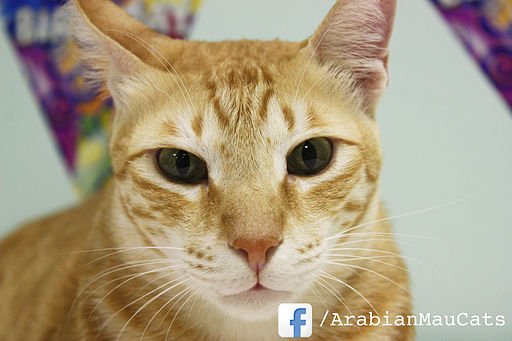
Bex Arabian Mau

The Arabian Mau cat is a very old natural breed. SolnishkoA / CC BY-SA 


Arabian Mau History


One of the oldest of all of the natural feline breeds is the Arabian Mau. The Arabian Mau domestic cat has been existing for more than a thousand years. Due to the dry desert and lack of food, the Arabian Mau Kuwait, Qatar, Saudi Arabia, and the United Arab Emirates came from Africa many years ago. The Arabian Mau cat, which moved to the locality in search of food, is now a very popular pet in the middle east.

There is no need to purchase if you want to take the Arabian Mau Cat. You can find the Arabian Mou cat in shelters or rescue teams.

The Arabian Mao cats like to rest during the day And prefer to wander in the dark of night, much like their ancestors. "Mau" is actually the Egyptian word for "cat" from which the cat is named Arabian Mau.


Arabian Mau Breed Overview


Arabian Mau Cat

Beautiful Arabian Cat SolnishkoA / CC BY-SA

Length: The size of the male Arabian Mou is 10 to 11 inches and the female 8 to 9 inches

Weight: The Arabian Mau male weighs 9 to 18 pounds, 13 is average, and the female weighs 8 to 14 pound

Coat Color: The Arabian Mou Coat color black, white, and brown combinations are the most common, often with tabby-style markings. In more rare cases, the cat can be mixed with red

Eye Color:  Arabian Maus has bright green eyes.

Life Time: Usually the Arabian Mou lives 14 or 15 years.


Arabian Cat Breed Traits


The Arabian Mau is a very popular domestic cat they are social and energetic. They can adapt to any place inside or outside the house, Gradually, after getting acquainted with everyone in the house, they became very closer and playful. Arabian Mau cats are social and especially energetic.

The Arabian Mau quickly formed a good bond with the children of the house They may also be mixed with other pet animals in the house. These kitties are so intelligent, friendly, and adaptable, they will get along great with just about anyone. If you are looking for a cat for a pet then Arabian Mau is best


Arabian Mau Health


Calico arabian mau cat

The Arabian Mau taking rest  Jeweliadubai / CC BY-SA    

The Arabian Mau breed is a natural cat breed so they are very healthy. Arabian Mau is not known for any particular disease, at least not for the breed. 

However, you need to keep an eye on the symptoms that are harmful to the upper cat


Arabian Mau Grooming


The hairs of Arabian Mau cats very small. Which is why you don't have to worry too much about grooming. So, you can use a soft brush to brush only once a week to remove dead hair and skin. The eye side should be cleaned with a wet cloth every week also for their ears, it is best to clean with a cotton ball soaked in warm water and cedar vinegar.

Monday, 31 August 2020

The Cutest Endangered Species sand cat

Persian sand cat (DYK crop)


                      The Sand cat scientific Specification

Kingdom:

Animalia

Phylum:

Chordata

Class:

Mammalia

Order:

Carnivora

Suborder:

Feliformia

Family:

Felidae

Subfamily:

Felinae

Genus:

Felis

Species:

F. margarita


Today we are going to know about the cutest endangered cat, Anyone who sees her goes after her in love.The sand cat is not extinct. The smallest of all wild cats, living in sandy and stony deserts far from water sources. The Cutest Endangered  Species sand cat head-and-body length ranges from 39cm – 52cm (15"–20") with a 23cm – 31cm (9.1"–12.2") long tail. Its 5cm–7cm (2.0"–2.8") long ears are set low on the sides of the head, Which helps them to mix with the sand at prey time. 


SandCat12


The long fur on their legs And the soles of their feet pad protect them from the hot sand of the desert. The sand cat was the first time discovered 1858 in Algerian Sahara. Nowadays sand cat found in the deserts of northern Africa and central Asia. After regional exchanges between Israel and Jordan in 1994The species became extinct from that region due to habitat destruction. it is listed as Least Concern on the IUCN Red List. The population is estimated to be below 28,000.


Image by Darren Coombs from Pixabay

Sand cats like to rest during the day, much like black-footed cats, and They go hunting at night to find food On average, they cover an area of ​​5 km to 4 km every night search for small rodents and birds. In spring, the female gives birth to 2 to 3 kittens, Weight at birth is 50 – 60 grams. which become sexually mature around the age of 1 year.


Felis margarita 9 
TimVickers / Public domain / Wikimedia

The Sand Cat is the only cat that survives essentially in the desert. A sand cat can run as fast as  25 mph. They can also be far away from the water. They can survive dehydration from their prey food. Sand cats usually prey on rats, Sometimes they also prey on birds, spiders, and reptiles. Since they live in the desert, they have to deal with venomous snakes. Sand cats can also kill a venomous snake


Sand cat at bristol zoo arp 
Arpingstone / Public domain / wikimidea

The Sand cat  Lifespan in the wild is unknown, but In human care, sand cats can live to be 13 years old.
Some people hunt sand cats, keep them in cages and sell them on the black market. Many people buy sand cats for pets. Locally, sand cats may be threatened by the pet business. Sand cats are occasionally reported to be shot in Saudi Arabia But that's not right, they love to live a wild environment. We should all understand that wild animal are beautiful in the forest.